Want to last longer on the court? Building endurance for padel and tennis requires a mix of cardio, strength, agility, and recovery techniques. These sports demand short bursts of energy with sustained stamina, so training both anaerobic and aerobic systems is key. Here's how to get started:
- Cardio Training: Combine steady-state cardio (e.g., jogging or cycling) 3–4 times a week with high-intensity interval training (HIIT) to mimic match intensity.
- Strength and Agility: Focus on compound lifts like squats for power, core exercises for stability, and drills like shuttle runs for quick direction changes, or work with local courts and coaches to refine your movement.
- Recovery: Use cold water immersion, foam rolling, and proper nutrition (carbs + protein) to repair muscles and prevent fatigue.
- 7-Day Plan: Alternate cardio, strength, agility, and rest days to avoid overtraining.
Consistency and proper recovery are non-negotiable. Start small, track your progress, and gradually increase intensity to improve stamina and performance.
Cardiovascular Training for Better Stamina
Steady-State Cardio
Building cardiovascular stamina is key to maintaining energy during long matches. Steady-state cardio helps develop your aerobic base, which is essential for extended play. Activities like jogging, cycling, or swimming at a consistent, moderate pace for 30–60 minutes are effective ways to train this system [2]. Keep your effort around 70% of your heart rate reserve for the best results [2].
Running is particularly effective since it closely mimics on-court movement [2][4]. If joint issues are a concern, cycling or rowing can be excellent alternatives [1][2]. Interestingly, during steady-state cardio, your body relies on fat for 40–60% of its energy [2].
"Should be performed three to four times a week within an endurance training block and at least once a week during tournament season." - International Tennis Federation [2]
To build endurance, aim for three to four sessions per week. Once you're in tournament season, scaling back to at least one session a week will help maintain your fitness. Start with shorter sessions of 15–20 minutes and gradually increase the duration over time [1][3][4].
Now that we've covered steady-state cardio, let’s look at HIIT, which mirrors the intensity of match play.
High-Intensity Interval Training (HIIT)
HIIT is designed to replicate the stop-and-start pattern of a match. It involves short bursts of intense effort followed by brief recovery periods, making it an excellent tool for improving cardiovascular endurance. Studies show that HIIT can boost endurance by 38% to 79% [6] and trains your body to recover faster between points.
A basic HIIT workout might include 30-second sprints followed by 1 minute of walking, repeated for 20 minutes [1]. For more advanced training, try intervals of 20–30 seconds at 9/10 intensity with equal rest periods. Another effective method, Sprint Interval Training (SIT), involves 15–30 seconds of all-out effort followed by 2–5 minutes of recovery. Research shows that an 8-week SIT program improved total sprint time by 4.84 seconds, compared to 1.87 seconds with traditional HIIT [5][7][8].
To make your training even more match-specific, include on-court drills like lateral shuffles or multidirectional sprints [5]. Perform HIIT 2–3 times a week during your preparation phase, but be sure to take at least one full rest day to avoid overtraining [1][4][5].
sbb-itb-5591e69
Strength and Agility Exercises for Court Performance
Strength Training for Muscular Endurance
Strength isn’t just about raw power - it’s about maintaining that power throughout a match. Building strength helps you sustain intensity during long rallies and grueling sets. Compound exercises like squats and deadlifts are key for developing the explosive power needed for quick sprints and those game-winning serves.
To take it a step further, include unilateral exercises - movements that target one side of your body at a time. Single-leg lunges and single-arm presses, for instance, improve balance and stability, which are critical when you’re constantly changing direction on the court. Given the demands of a match, where you might have to retrieve low balls dozens of times, focusing on your lower body is especially important [10].
Pair this with core work to enhance stability during quick turns and rotational movements. Planks, Russian twists, and Pallof presses help you stay steady during those sharp directional changes, while exercises like single-arm chest presses and renegade rows improve racket control and reduce the risk of shoulder injuries. For best results, aim for two to three strength training sessions per week on your non-playing days, performing three sets of 10–12 reps to build endurance without adding unnecessary bulk.
"Strength training is such a game-changer for tennis players - and for people involved in any sports." - Assal Arian, Peloton Instructor
Agility Drills for Better Court Movement
Once you’ve built a solid strength foundation, it’s time to focus on converting that power into agility - one of the most crucial skills for court performance. Agility isn’t just about speed; it’s about how swiftly and efficiently you can change direction. Agility ladder drills, like high knees and lateral shuffles, are excellent for sharpening your footwork and coordination. Dedicate 10–15 minutes to these drills at the end of your workout, performing 3–4 sets lasting 30–60 seconds each.
Shuttle runs are another simple yet effective way to boost balance and improve deceleration. Set up two cones about 33 feet (10 meters) apart, then sprint between them, touching each cone to practice quick stops and sharp turns. To add explosive power to your game, include plyometric exercises like box jumps and lateral bounds. Perform 3 sets of 6–8 reps, focusing on soft landings with slightly bent knees to protect your joints.
The split step is one of the most critical movements on the court. This small bounce on your toes between shots helps neutralize momentum and gets you ready to change direction quickly. Make it a habit to practice the split step during your drills and matches.
"The split step is probably the MOST important movement in padel. It should occur between every single shot played between you and your opponents." - Ewan Ramsden
Shadow drills are another valuable tool, focusing entirely on footwork. Mimic movements like stepping back for a lob or moving forward for a drop shot to build muscle memory. With nearly 40% of padel injuries occurring in the lower legs [10], these drills also strengthen the stabilizing muscles around your ankles and knees, reducing the risk of injury while improving your overall court performance.
Recovery and Nutrition for Endurance Training
Post-Workout Recovery Techniques
After grueling strength and agility sessions, recovery is where the magic happens. It’s during this time that your body adapts and gets stronger. One effective method? Cold water immersion. Taking a dip in water between 50°F–59°F (10–15°C) after training helps reduce muscle inflammation and soreness. Studies even suggest it can boost endurance and strength by 2–3%[11].
"A 2–3% improvement in tennis performance can significantly aid an athlete during a tournament, but also can help in the day-to-day improvements during practice." - Mark S Kovacs, Gatorade Sport Science Institute[11]
Timing matters here. While you might feel instant relief, the real benefits of cold water immersion often show up 2–4 days later[11]. For athletes competing in tournaments at top UK padel locations with multiple matches, repeating this recovery method daily for 2–4 days post-competition can be especially helpful. Pair this with compression garments right after your ice bath to ease muscle soreness and fight off fatigue[11].
But recovery doesn’t stop there. Foam rolling and stretching are excellent for keeping your range of motion intact and preventing overuse injuries. And don’t underestimate the power of complete rest days - they’re not just about taking it easy. This downtime is when your body rebuilds and gets stronger, making it a crucial part of any training plan.
Nutrition for Endurance Athletes
Recovery nutrition boils down to three main goals: rehydration, replenishing glycogen stores, and repairing muscles. Start by weighing yourself before and after a match or workout. For every pound lost, drink 16–24 ounces of a sodium-rich electrolyte drink (20–50 mEq/L). Water alone won’t cut it - you need those electrolytes to fully rehydrate[11].
Timing your meals is just as important. If you’ve got less than 8 hours between matches, aim to consume 0.45–0.55 grams of carbohydrates per pound of body weight every hour for the first 4 hours after your match[11]. For protein, 20–25 grams post-training is enough to kickstart muscle repair without added benefits from higher amounts[11]. To maximize glycogen replenishment, try to eat a recovery meal or snack that combines carbs and protein within an hour of finishing your workout[12][13].
"When it comes to performance and maintaining high intensity energy levels the carbs are king which is why they make up the lion's share of what you will be eating during match day." - Rob Hobson, Nutritionist[12]
For your meals, focus on slow-digesting carbs like oatmeal, whole-grain bread, brown rice, or sweet potatoes. Pair these with lean proteins such as chicken, fish, eggs, or Greek yogurt. Add some vegetables for antioxidants and healthy fats like avocado, nuts, olive oil, or fatty fish[12][13]. Need a pre-training boost? Eat a carb-centric meal 2–3 hours before you start. If you’re short on time and eating less than an hour before playing, stick to easy-to-digest options like a banana or low-fat yogurt[12][13].
Padel Fitness Masterclass: Functional Training Routine to Play Like a Pro
7-Day Endurance Training Plan
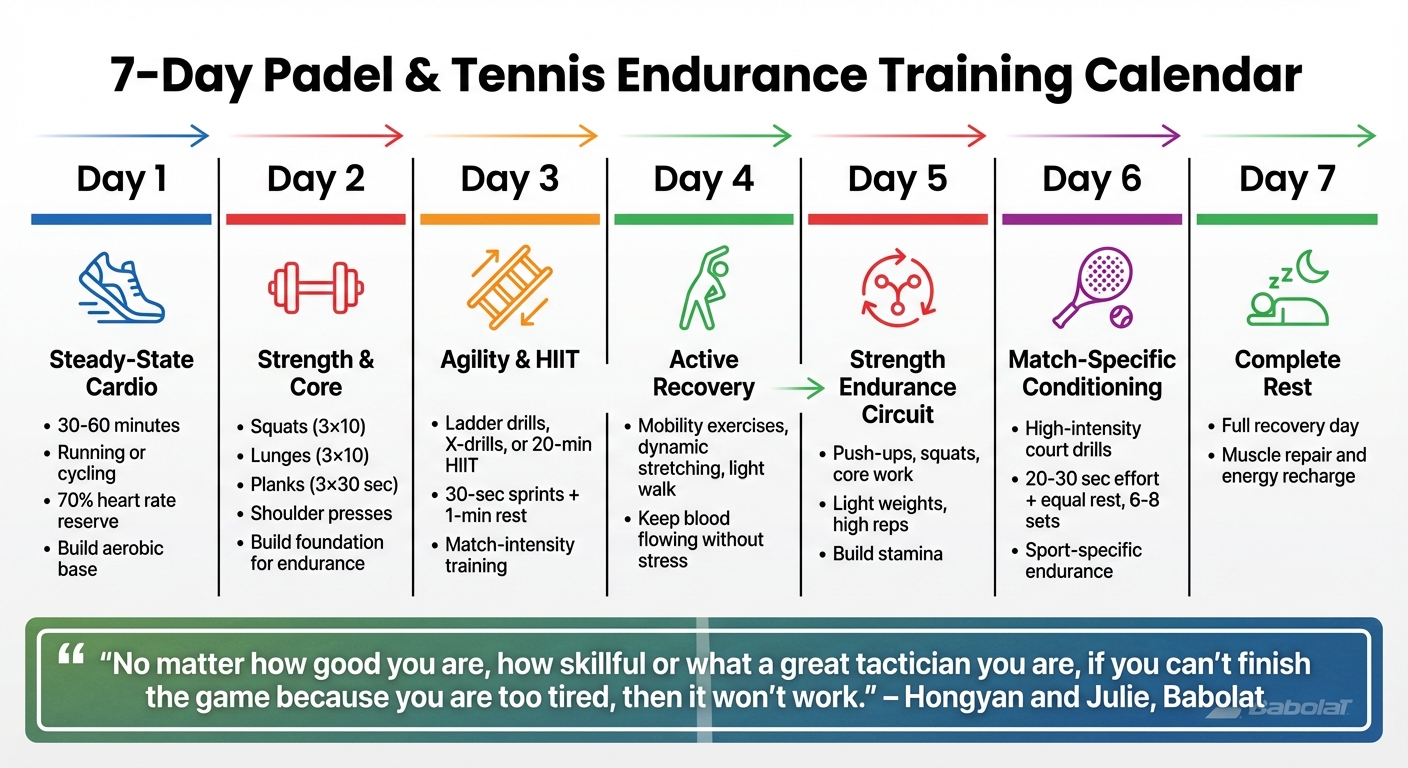
7-Day Endurance Training Plan for Padel and Tennis Players
Daily Training Breakdown
This week-long plan is designed to balance workouts with recovery, helping you build endurance effectively. Here’s how each day is structured:
Day 1: Start with steady-state cardio. Spend 30 to 60 minutes running or cycling at about 70% of your heart rate reserve. This helps develop your aerobic base without overexerting yourself.
Day 2: Shift to strength and core exercises. Try squats (3×10), lunges (3×10), planks (3×30 seconds), and shoulder presses. These moves build the foundation for endurance and stability.
Day 3: Work on agility and high-intensity interval training (HIIT). Include ladder drills, X-drills, or a 20-minute HIIT session alternating 30-second sprints with 1-minute rest periods.
Day 4: Take it easy with active recovery. Focus on mobility exercises, dynamic stretching, or a light walk. This keeps your blood flowing and muscles loose without adding stress.
Day 5: Return to strength endurance with circuit training. Include exercises like push-ups, squats, and core work using light weights and high repetitions to build stamina.
Day 6: Practice match-specific conditioning. Try high-intensity court drills or "Repeated Effort" sessions - 20–30 seconds of intense movement followed by equal rest, repeated for 6–8 sets.
Day 7: Rest completely. This is your recovery day, allowing your muscles to repair and your energy levels to recharge.
"No matter how good you are, how skillful or what a great tactician you are, if you can't finish the game because you are too tired, then it won't work."
– Hongyan and Julie, Babolat
This schedule provides a solid starting point. Over time, you can gradually increase the intensity and duration of your workouts.
How to Progress Over Time
Begin with a level of effort that feels manageable and gradually increase from there. For example, if you’re new to running, start with 15–20 minutes per session. Add a few minutes each week until you can sustain 75 minutes of vigorous activity. For strength training, start with bodyweight exercises, then introduce weights or plyometric moves like vertical jumps to up the challenge.
Pay attention to your heart rate reserve to stay in the right intensity zones - approximately 70% for longer aerobic sessions and closer to 80% for high-intensity efforts. During drills, watch for signs of technical fatigue, which could mean it’s time to dial back the intensity. And if you notice persistent tightness in areas like your elbows, knees, or lower back, prioritize recovery to avoid injury.
Conclusion
Key Takeaways
Building endurance is all about finding the right mix of training. Aerobic exercises help you power through long matches, while anaerobic training prepares you for those quick, explosive moves - like chasing down a tough shot. Strength training not only enhances muscular endurance but also protects your joints during fast direction changes. And don’t forget agility drills, which are key to improving your footwork on the court.
Recovery is just as important as training. Make sure to schedule at least one full rest day each week, prioritize quality sleep, and fuel your body with the right nutrition. Listening to your body’s signals is crucial. As Rodrigo Banzer wisely puts it:
"Building stamina and endurance for padel takes time and dedication, but the rewards are worth it" [1].
Consistency is the foundation of progress. Training within your target heart rate zones ensures you maintain proper intensity without overdoing it [2]. This structured approach not only helps you avoid burnout but also keeps you sharp and steady during those critical late-match moments [9][4].
Next Steps for Players
It’s time to put these strategies into practice. Start with the 7-day training plan provided, adjusting the intensity to match your current fitness level. For beginners, this might mean starting with 15–20 minutes of running three times a week and gradually working up to the CDC’s recommendation of 75 minutes of vigorous activity per week [4]. Track your progress by monitoring improvements in speed, distance, and heart rate recovery [2][4].
To make the most of your fitness gains, practice on quality courts. Check out options like Padel and Tennis Courts in the UK to find excellent facilities near you, whether you’re in London, Surrey, or elsewhere. Incorporating sport-specific drills and match play into your routine will ensure your endurance translates into winning those all-important points.
FAQs
How can HIIT help improve endurance for padel and tennis?
High-Intensity Interval Training (HIIT) is an excellent way to increase endurance for sports like padel and tennis. It works by improving your VO₂ max - the maximum oxygen your body can utilize during exercise - while boosting both your aerobic and anaerobic systems. The result? You'll be better equipped to sprint faster, recover more quickly between points, and sustain energy during those long, grueling rallies.
HIIT mirrors the dynamic, stop-and-start nature of padel and tennis matches. By alternating between short bursts of intense activity and recovery periods, this training method not only builds stamina but also enhances speed and agility, giving you a competitive edge on the court.
How does nutrition impact endurance and recovery for Padel and Tennis?
Nutrition is a cornerstone for boosting endurance and speeding up recovery in sports like Padel and Tennis. These games demand repeated bursts of high-intensity movement, which can quickly drain your energy reserves. To keep up your stamina and push back fatigue, a diet rich in carbohydrates is key. Adding lean proteins to your meals aids in muscle repair, while healthy fats and a variety of vegetables supply essential nutrients that support overall performance and strengthen your immune system.
What you eat after a match matters just as much. A combination of carbs and protein post-game helps restore energy levels and repair muscles, cutting down recovery time. Staying hydrated is another must - players can lose several pounds of sweat in just an hour, so replenishing fluids and electrolytes is critical to prevent cramping and maintain endurance. By consistently fueling your body with the right nutrition, you'll not only perform better on the court but also recover faster for your next match.
Why is agility training important for improving your game on the court?
Agility training plays a key role in boosting your speed and efficiency on the court. It sharpens your reaction time, enhances your ability to change direction quickly, and helps you reach the ball faster during those intense rallies.
When you prioritize agility, you'll not only move across the court more effectively but also maintain greater balance and control - both of which are crucial in fast-paced sports like padel and tennis. Adding agility drills to your training routine can significantly elevate your game.