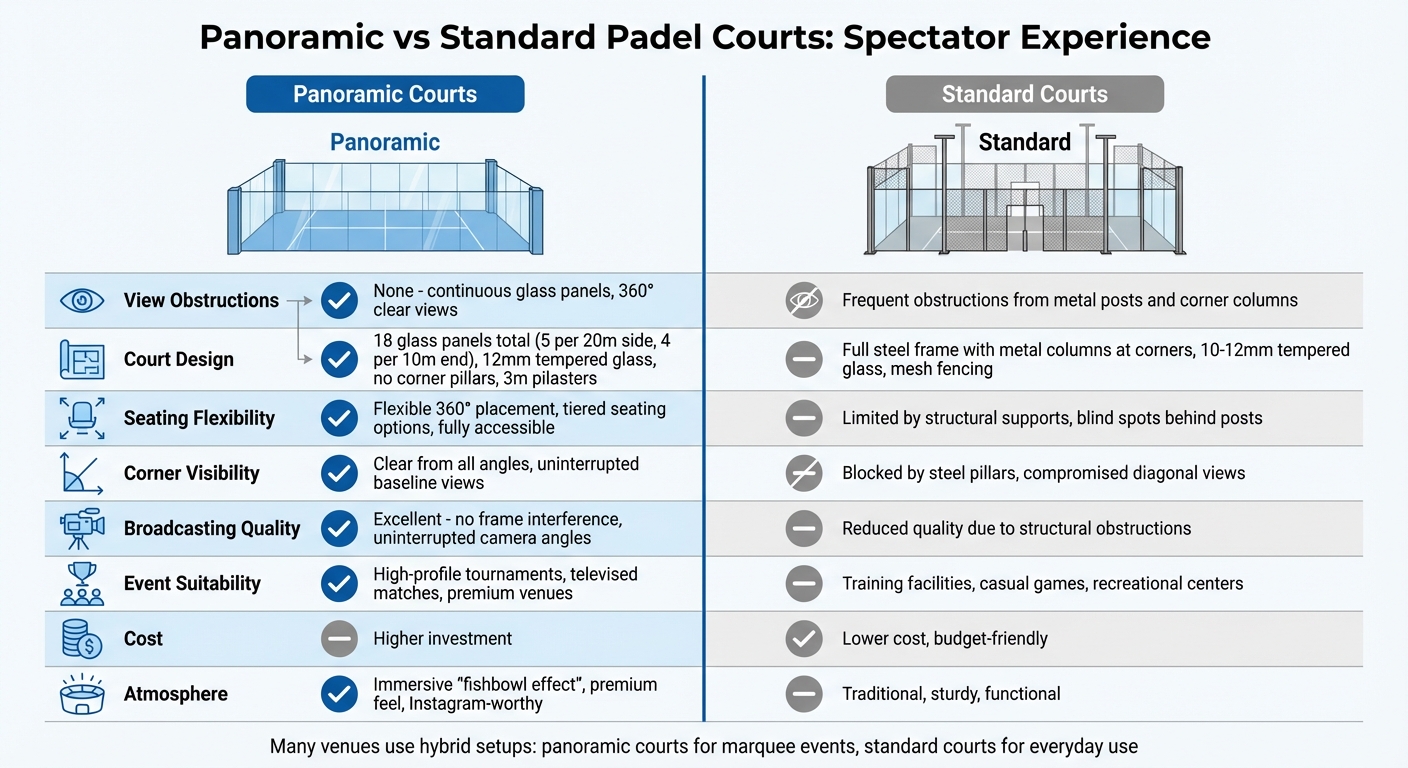
Panoramic courts and standard courts offer very different viewing experiences for padel spectators. Panoramic courts use continuous glass panels, eliminating corner posts for clear 360° views. This design is ideal for tournaments, premium venues, and TV broadcasts. Standard courts, with steel frames and corner columns, are more affordable but can obstruct views. Here’s a quick breakdown:
- Panoramic Courts: Clear sightlines, no obstructions, better for broadcasts, and flexible seating options.
- Standard Courts: Durable, cost-effective, but posts can block views, limiting seating flexibility.
Quick Comparison
| Feature | Panoramic Courts | Standard Courts |
|---|---|---|
| View Obstructions | None (glass panels) | Frequent (metal posts) |
| Seating Options | Flexible, uninterrupted | Limited by structural supports |
| Event Suitability | High-profile matches, broadcasts | Training, casual games |
| Costs | Higher | Lower |
Panoramic courts prioritize visibility and spectator immersion, while standard courts focus on durability and affordability. Many top UK locations use both types to balance costs and viewing quality.
Panoramic vs Standard Padel Courts Comparison for Spectators
PANORAMIC padel court JUBO PADEL
sbb-itb-5591e69
Design Differences Between Panoramic and Standard Courts
These design elements have a direct impact on seating comfort and the quality of views for spectators.
Panoramic Court Design
Panoramic courts are designed to maximize visibility by completely removing corner pillars. Instead of traditional steel framing, these courts feature continuous 12mm tempered glass panels that wrap around the entire playing area [1] [4] [5]. Each panel typically measures 2 m (6.5 ft) in width and 3 m (10 ft) in height. A standard panoramic court layout requires 18 glass panels - five along each 20 m (65 ft) side and four along each 10 m (33 ft) end.
The absence of posts ensures that spectators enjoy an unobstructed view of the action. To maintain structural stability without corner supports, these courts incorporate 3 m (10 ft) pilasters and use thicker glass engineered to handle both impacts and wind speeds of up to 87 mph.
This design prioritizes the spectator experience, making panoramic courts ideal for professional events and venues where clear visibility is key.
Standard Court Design
In contrast, standard courts rely on a full steel frame, with metal columns placed at the corners and sometimes between the glass panels for added support [2] [6]. While this setup ensures durability, the vertical posts can create blind spots for spectators. The design typically incorporates 10mm to 12mm tempered glass, which is integrated into the steel framework, along with mesh fencing to fill in areas where glass panels are not used.
This traditional approach focuses on practicality and cost-efficiency, making it a popular choice for training facilities and recreational centers where a perfect 360° view isn't a priority. While it may not offer the same level of visual clarity as panoramic courts, it remains a reliable and budget-friendly option.
Seating Comfort and Accessibility
Seating arrangements play a key role in shaping the overall spectator experience. The difference between panoramic and standard courts is especially evident in how they handle seating. Panoramic courts, with their sleek glass designs, allow for uninterrupted seating placement around the entire perimeter. Standard courts, on the other hand, rely on steel supports that create blind spots and restrict seating options. These seating setups directly stem from the structural differences discussed earlier.
Panoramic Court Seating
Panoramic courts provide a seamless 360° viewing experience, making seating arrangements much more flexible. Thanks to the unobstructed glass walls, seating can be positioned to accommodate various needs and ensure a clear view for everyone. This design makes the courts more accessible, allowing fans with mobility challenges to enjoy the game without compromising on viewing quality. Additionally, the open design supports elevated, tiered seating - perfect for tournaments and premium clubs. Tiered seating behind the glass creates an immersive environment, bringing fans closer to the action.
"The design ensures unobstructed views, making these courts ideal for high-profile matches and clubs looking to attract players." [7]
Standard Court Seating
In contrast, the steel framework of standard courts introduces visual obstructions that limit seating flexibility. Spectators seated behind these structural elements often face compromised views, and those in accessible seating areas may have fewer options to adjust their perspective. This makes it harder to achieve optimal viewing conditions, especially in venues hosting high-profile events.
Viewing Angles and Visibility
The structural differences between panoramic and standard courts create vastly different viewing experiences. Standard courts rely on metal columns, which often obstruct views, especially at diagonal angles. In contrast, panoramic courts eliminate these pillars entirely, offering spectators a clear 360° view from anywhere along the perimeter.
This design isn't just a win for live audiences - it also enhances broadcasting. Panoramic courts are specifically designed to accommodate TV and streaming needs. Without steel frames interrupting sightlines, cameras can capture uninterrupted angles. As UK Padel Courts explains:
"The side and rear glazing do not have any type of steel upright, thus facilitating TV broadcasting and offering clear visibility for viewers." [3]
This makes panoramic courts a favorite choice for professional tournaments and high-profile matches.
Corner seating is where the difference becomes particularly noticeable. On standard courts, spectators seated near the corners often have obstructed views due to steel supports. Panoramic courts, however, provide an uninterrupted perspective from all angles, including a completely clear baseline view. These design details highlight the stark contrast in viewing experiences.
Viewing Angle Comparison
| Aspect | Panoramic Courts | Standard Courts |
|---|---|---|
| View Obstructions | None (seamless glass) | Frequent (metal posts obstruct views) |
| Corner Visibility | Clear from all angles | Blocked by steel pillars |
| Baseline Views | Uninterrupted, pillar-free | Limited by structural supports |
| Viewing Immersion | High, fully immersive experience | Moderate, varies by seating |
| Broadcasting Quality | Excellent for TV and streaming | Reduced due to frame interference |
These differences in viewing angles significantly elevate both live and broadcast experiences. The seamless 12mm tempered glass used in panoramic courts creates what some describe as a "fishbowl effect", pulling spectators into the action. This design intensifies the sense of speed and energy during fast-paced rallies. On the other hand, standard courts, with their steel framework, offer a more traditional feel, where visual barriers can detract from the overall experience.
Advantages and Drawbacks for Spectators
When it comes to spectator experience, the type of court design - panoramic or standard - plays a big role in what viewers see and feel during a match. Each option has its perks and challenges, making the choice heavily dependent on the venue's goals and audience expectations.
Panoramic courts stand out for their all-around clear views, giving spectators a sense of being fully immersed in the action. This design works especially well for high-profile tournaments or events that thrive on social media buzz, as it appeals to younger, tech-savvy audiences. On the other hand, standard courts are a more budget-friendly choice, making them a go-to for training facilities or local padel clubs. However, the structural elements of standard courts, like metal posts, can sometimes obstruct views and limit the overall spectator experience.
Maintenance also plays a part in the spectator experience. Panoramic courts, with their large glass panels, demand regular cleaning to keep visibility pristine. This upkeep ensures the court continues to deliver the premium viewing experience it’s known for.
Pros and Cons of Panoramic vs. Standard Courts
The table below breaks down the main differences between panoramic and standard courts, focusing on how they impact spectators.
| Feature | Panoramic Courts | Standard Courts |
|---|---|---|
| Visibility | Clear, unobstructed views with minimal interference from support structures. | Metal posts may create blind spots, though costs are lower. |
| Event Suitability | Perfect for tournaments, televised matches, and events with a focus on aesthetics. | Best suited for training sessions and casual games, prioritizing functionality. |
| Atmosphere | Immersive experience with plenty of natural light. | Traditional look with a sturdy steel frame, but lacks a premium feel. |
| Broadcasting | No structural obstructions, making it ideal for camera setups, though advanced lighting (8–12 spotlights) is often required to avoid glare. | Easier and quicker to install, but camera angles may be limited by structural posts. |
Many clubs strike a balance by incorporating both types of courts: panoramic courts for standout events and standard courts for everyday use. This hybrid approach helps meet diverse needs while managing costs effectively.
Conclusion
Panoramic courts stand out when it comes to delivering an exceptional spectator experience, especially for large-scale events and premium venues. Thanks to their pillar-free construction and 12 mm tempered safety glass, these courts offer uninterrupted 360° views that traditional courts just can't provide. This makes them the go-to option for professional tournaments, televised matches, and venues where top-notch broadcasting and audience engagement are priorities.
"Unbroken glass walls and minimal posts create better sight lines for spectators and broadcasting, making the court a popular choice for events, coaching sessions, and center-court venues." - Lofthouse Padel Court Specialists [4]
Beyond functionality, the sleek design and immersive feel of panoramic courts resonate with younger audiences who appreciate their "Instagrammable" qualities. Many high-end clubs are now opting for a hybrid setup - featuring a single panoramic center court for marquee matches while sticking with standard courts for everyday use. This approach balances the elevated viewer experience with practical cost considerations.
If you're eager to see these premium courts in action, the Padel and Tennis Courts in the UK directory is a handy resource. It lists venues with panoramic installations across London, Surrey, and beyond. Whether you're attending a tournament or just curious to explore, the directory makes it simple to find courts that combine cutting-edge design with outstanding viewing experiences.
FAQs
Which court type is best for spectators?
Panoramic padel courts stand out as a top choice for spectators because they offer clear, wide-angle views. Without corner pillars blocking sightlines, these courts allow fans to enjoy an unobstructed perspective from every angle. This makes them perfect for events like tournaments, exhibitions, and even televised matches. The design prioritizes excellent visibility, creating a better experience for everyone watching.
Do panoramic courts reduce glare for TV cameras?
Panoramic courts with glass walls are built to offer clear, unobstructed views, making them an excellent choice for minimizing glare during TV broadcasts. This design ensures better visibility not only for cameras but also for spectators, enhancing the overall viewing experience.
Are panoramic courts harder to maintain?
Panoramic courts aren't more challenging to maintain than standard courts. Their construction relies on tough materials like tempered glass, which are built to withstand the elements and make maintenance straightforward. With no corner pillars, there are fewer spots for dirt to gather, simplifying the cleaning process. Although cleaning the large glass panels might need some extra attention, the weather-resistant design ensures that overall upkeep is just as manageable as with traditional courts.