Taking care of your padel court fence is about safety, performance, and saving money on repairs. Regular maintenance ensures a secure playing environment, extends the lifespan of your fence, and keeps gameplay smooth. Here's what you need to know:
- Monthly Checks: Tighten screws, inspect for rust, and test stability to prevent bigger issues.
- Cleaning: Keep mesh free of debris and glass panels clear for visibility and durability.
- Seasonal Care: Protect against summer heat and winter moisture to avoid damage.
- Rust Prevention: Use anti-corrosion treatments and consider upgrades like galvanized coatings or fiberglass for long-term durability.
- Professional Help: Schedule inspections 1–2 times a year to catch hidden problems.
Spending $480–$600 annually on upkeep can prevent costly replacements at top UK padel locations. A little effort goes a long way in keeping your court safe and playable.
Essential Padel Court Fence Maintenance Schedule and Tasks
Padel Court Maintenance - Jaime de Miguel's Expert Advice
sbb-itb-5591e69
Why Regular Fence Maintenance Matters
Taking care of your fence isn’t just about keeping it looking good - it’s about ensuring safety and maintaining the quality of play on padel courts in the UK. A padel court fence serves as more than just a boundary; it plays a key role in protecting players and upholding the structure of the court. Skipping regular upkeep puts both safety and the fence's durability at risk. For instance, the silicone layer between panels should be checked monthly to ensure proper separation[1].
Safety and Player Experience
The state of the fence directly affects player safety and the overall game experience. As SIS Pitches explains:
Checking the integrity of the fencing and glass structure is paramount to ensuring the facility is safe for players[2].
If you notice loose panels or structural issues, it’s crucial to close the court until repairs are completed. Problems like mesh deformities from repeated ball impacts don’t just look bad - they can also mess with the ball’s bounce, disrupting gameplay[8].
In addition to safety, maintaining the fence protects your investment, ensuring the court stays in top condition for years to come.
Extending Fence Lifespan
Routine maintenance isn’t just about fixing problems - it’s about catching them early to avoid bigger, more expensive repairs down the line. Metal fences, especially those exposed to the elements, are vulnerable to rust and corrosion[6]. Spending an average of $480 to $600 annually on maintenance can save you from costly replacements caused by loose fittings or extensive rust damage[7].
Monthly inspections are key. They allow you to address minor issues like tightening bolts or applying anti-corrosion treatments before they escalate. Portico Sport highlights the importance of early intervention:
Specialists detect early signs of wear and provide preventive solutions, avoiding costly repairs in the future[6].
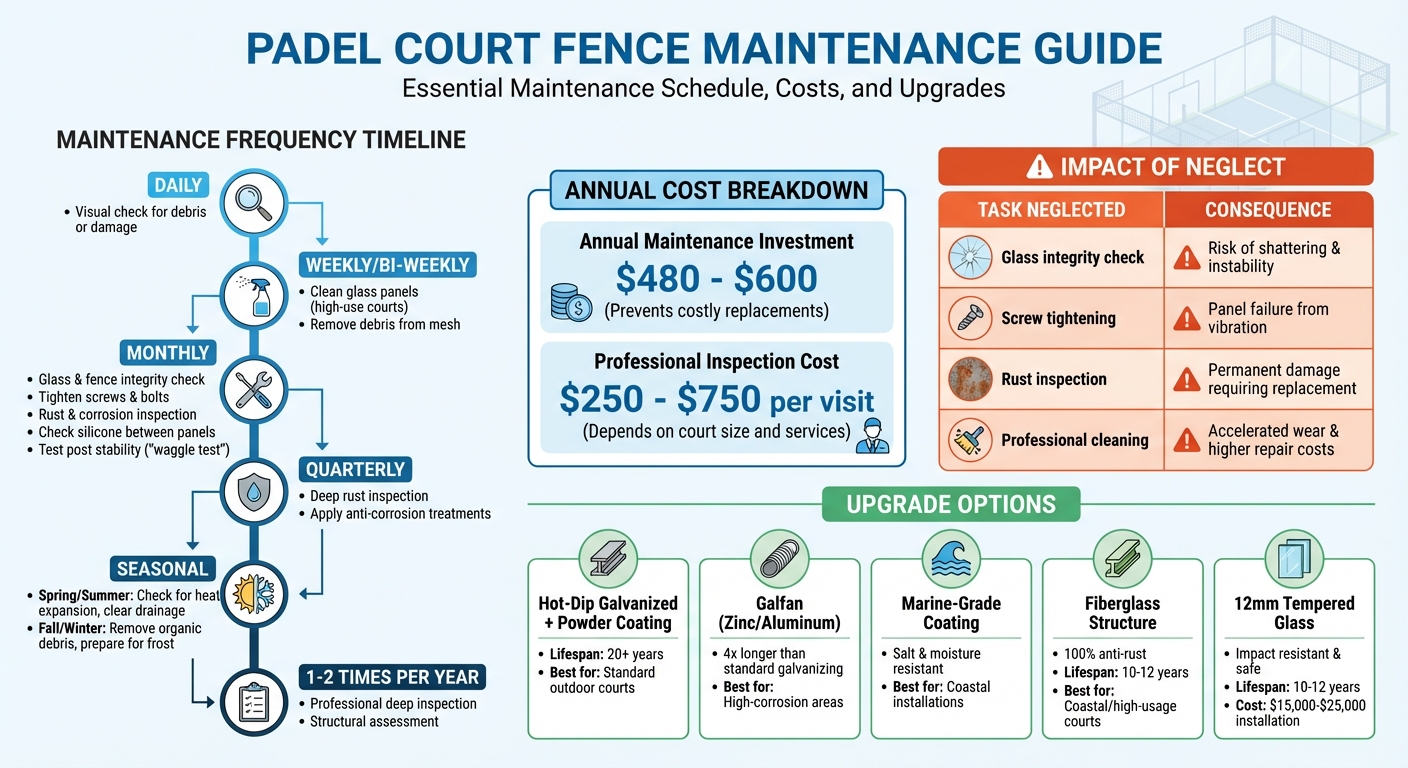
Here’s a quick breakdown of essential maintenance tasks:
| Maintenance Task | Recommended Frequency | Impact of Neglect |
|---|---|---|
| Glass & Fence Integrity Check | Monthly | Risk of glass shattering and structural instability[1] |
| Screw & Bolt Tightening | Monthly | Increased vibration leading to panel failure[1] |
| Rust & Corrosion Check | Monthly/Quarterly | Permanent damage requiring full replacement[2] |
| Professional Deep Clean | 1–2 Times per Year | Accelerated wear and higher long-term repair costs[2] |
Outdoor courts need extra care due to exposure to rain, humidity, and wind, which can speed up rusting and loosen fasteners[6]. Clearing debris from the fence base is another simple but effective step - it prevents moisture buildup that can lead to localized corrosion[2]. Regular attention to these details ensures your fence stays safe, durable, and ready for play.
How to Clean Padel Court Fences
Keeping your padel court fences clean doesn’t take much equipment or time, but it does require some attention to detail. Whether you’re dealing with mesh fencing or glass panels, regular maintenance keeps the court looking sharp and ensures safe gameplay.
Removing Debris from Mesh Fences
Mesh fences can collect leaves, dirt, and other debris, which can affect their functionality if not addressed. Start by using a nylon-bristle brush to manually clear out any trapped materials from the wire structure. For larger areas, a leaf blower can save time, but make sure it doesn’t disturb the sand infill on the court surface[2].
When clearing organic debris like leaves, opt for a plastic, rubber, or nylon rake to avoid damaging the mesh coating[2]. During fall, increase cleaning frequency to prevent decomposing leaves from promoting mold or fungi growth[10]. If grime proves stubborn, a pressure washer can help, but use it carefully to avoid harming the fence[3]. Trimming nearby trees and hedges can also minimize the amount of debris that accumulates in the mesh[3].
Now, let’s talk about glass panels, which call for a gentler touch.
Cleaning Glass Panels and Frames
Glass panels require extra care to keep them scratch-free and clear. Begin by wiping the surface with a dry microfiber cloth to remove loose dust and dirt before applying any liquid cleaner. This step helps prevent scratches from abrasive particles[9].
As Migo Glass points out:
Glass panels in padel courts are subject to outdoor weather conditions, continuous impact from the ball, and frequent contact during gameplay. Without proper maintenance, dirt, smudges, hard water stains, and even minor surface damage can accumulate over time. [9]
Once the surface is dust-free, spray a pH-neutral glass cleaner or a 1:1 vinegar-water mix onto the panel. Let it sit for 20–30 seconds before wiping it down with a damp microfiber cloth or a non-abrasive sponge, using circular motions. Pay close attention to corners, as grime tends to build up there. Finish by pulling a rubber-bladed squeegee from top to bottom, wiping the blade after each pass to avoid streaks. High-use courts may need this process weekly or bi-weekly, while lower-use clubs and courts can usually get by with monthly cleaning[2].
For the frames, check monthly for loose bolts and apply anti-corrosion treatments to metal parts, especially for outdoor courts. Ensure rubber gaskets and silicone seals are intact - the silicone should be thick enough to prevent the glass panels from touching during impacts. Finally, avoid aiming a pressure washer directly at the edges or seals of glass panels, as this could cause serious damage[9].
Finding and Fixing Fence Damage
Spotting fence problems early can save you from expensive repairs later. Building on regular maintenance routines, aim to inspect your fence monthly, paying close attention to metal components, hardware, and post stability. As SIS Pitches emphasizes:
Checking the integrity of the fencing and glass structure is paramount to ensuring the facility is safe for players[2].
Start with what The Buy Fencing Direct Team refers to as the "waggle test" - give each fence post a push or shake to see if it moves. If a post shifts too easily, it might be rotting at the base or have unstable anchors[11]. Make sure every post has a cap to shield it from moisture damage[11]. Also, check for mesh sections or slats that may have come loose from temperature changes or player activity, and secure them immediately to prevent further damage[11].
Detecting Rust and Corrosion
Rust can be a major issue for outdoor courts, especially in coastal areas where salty air speeds up the oxidation process[12]. Here’s how to identify different levels of rust:
- Surface rust: Light scaling or pitting that you can usually scrape off.
- Moderate rust: Deeper blisters that haven’t yet deformed the metal.
- Severe rust: Cracks and bubbling that may require full part replacement[16].
To tackle rust, start by scrubbing the area with a wire brush or steel wool at a 45-degree angle. This removes loose oxidation without damaging healthy metal[14][16]. For heavy corrosion, use 80-100 grit sandpaper, and for lighter areas, switch to 220-400 grit for a smoother finish[16]. Clean the area with soapy water, dry it thoroughly, and apply a rust converter to any deep spots. This chemical treatment turns rust into a stable, paintable surface and cures to a dark purple color[13][16]. Finish by applying a rust-inhibiting primer followed by two coats of exterior-grade metal paint[13][15][16]. If your court is near the ocean, rinse metal parts regularly with fresh water to remove salt and slow the corrosion process[12].
Once rust is treated, inspect the fence for any weakened or damaged sections that need repair to ensure the structure remains secure.
Repairing Loose or Damaged Parts
Over time, gameplay vibrations can loosen screws and bolts, especially around glass panels attached to the fence. Tighten these fasteners regularly to keep everything secure[2]. If you notice minor bends in metal bars or mesh, you can often straighten them out using a hammer and a vice for support. However, if the damage is more severe, professional welding or part replacement may be necessary[14][15].
For gate hinges that squeak or feel stiff, pull out the hinge pin with pliers, clean it with a rag to remove dirt and rust, apply a lubricant with a thin nozzle, and reassemble the hinge[14]. If mesh sections are torn or individual slats are broken, replace them as soon as possible to prevent further deterioration[11][17]. Finally, trim back any plants or shrubs that come into contact with the fence, as they can trap moisture and accelerate metal decay[17].
Seasonal Maintenance Tasks
Besides the regular monthly inspections, tailoring your maintenance routine to the seasons can go a long way in protecting your investment. Weather changes throughout the year mean your fence requires different care depending on the season. By planning maintenance around these shifts, you can prevent damage early and ensure the court remains safe for players year-round.
Spring and Summer Care
Summer’s high temperatures can cause metal and glass to expand, leading to potential warping or gaps [4][18]. As Legend Sports explains:
"Some of the materials which padel tennis courts are made from can expand in high summer heat." [4]
During the summer months, it’s crucial to tighten fasteners monthly and check for signs of corrosion since heat and humidity can speed up wear and tear [2][4][6]. Glass panels should be cleaned weekly or at least every two weeks if the court is in frequent use, as increased humidity and activity can lead to faster buildup [2]. Don’t forget to clear drainage channels near the base of the fence to prevent water pooling, which can lead to mold, algae, or rust issues [5][6].
As the weather cools, it’s time to shift gears and prepare for the challenges of fall and winter.
Fall and Winter Preparation
Winter brings its own set of challenges, especially with moisture and frost. Fall is the ideal time to get ahead of these issues. Remove leaves, seeds, and other organic debris from the fence mesh and base to avoid trapped moisture, which can lead to mold and corrosion during colder months [2][19]. Benjamin Dupouy from Padel Magazine advises:
"Any cracks or irregularities should be treated quickly to prevent them from getting worse due to frost." [19]
Before winter hits, tighten all loose fence panels and posts to prepare for strong winds and heavy snow [2][6]. Apply anti-corrosion treatments to steel posts to protect them from constant exposure to moisture [6]. Clearing drainage systems before the first freeze is essential, as refrozen water can damage anchors and put pressure on panels [4][20].
If you’re in a coastal area, rinse metal components with fresh water during the fall to remove salt deposits that speed up oxidation [12]. For courts that won’t be used during the winter, consider heavy-duty covers designed to handle snow loads up to 660 lbs/m² to protect the structure [20].
Tools and Materials You'll Need
Having the right tools and materials on hand makes fence maintenance easier and helps keep your fence in great condition for years. A well-prepared maintenance kit is key to simplifying tasks and avoiding unnecessary damage.
For cleaning glass panels, you'll need a rubber-blade squeegee, microfiber cloths, and a pH-neutral cleaner. Alternatively, you can use a 1:1 mix of vinegar and water. If your panels are acrylic, stick to clean water, a soft cloth, and, if necessary, a scratch-removal paste [1]. As Migo Glass highlights:
To avoid scratching or damaging the glass, always use materials that are safe for tempered or laminated glass [9].
For clearing debris, tools like nylon-bristle brushes, leaf blowers, or plastic rakes work best. Keep basic repair tools on hand, similar to those used when building new courts,, such as wrenches, screwdrivers, and replacement stainless steel fasteners for quick fixes [2].
To protect steel posts and joints, apply an anti-corrosion spray or sealant. Use silicone to maintain proper spacing between glass panels, and in coastal areas, rinse metal components monthly to remove salt buildup [12].
When to Hire Professionals
While routine maintenance can often be handled in-house, more serious issues demand the expertise of professionals. Knowing when to bring in experts can save you from costly replacements and ensure player safety.
Recognizing Serious Damage
Signs of serious damage, like rusted or unstable fencing, are clear indicators that professional help is needed. Corroded fence posts, bent frames, or loose fasteners - especially after extreme weather - suggest structural problems that shouldn't be tackled with DIY fixes [2][6][22].
Make a habit of inspecting screws and bolts around glass panels and anchor points. Monthly visual checks can help catch these problems early. Pay extra attention to anchor points in outdoor or coastal areas, where moisture can speed up rusting [21]. For any of these critical issues, it's best to rely on professional services.
Advantages of Professional Services
Professionals go beyond routine maintenance by addressing issues that might not be obvious during standard inspections. They can spot early signs of wear and tear, offering preventive solutions that reduce the risk of complete fence replacements [6]. Their visits often include detailed structural assessments and repairs, helping to avoid major failures.
For optimal care, schedule professional audits every six months - or every three months for courts with heavy use. After severe weather, arrange for immediate inspections [2][6][22][23]. These visits typically cost between $250 and $750, depending on the court's size and the services needed [22]. While this might seem like an added expense, courts built with lower-quality materials can end up costing 20% to 30% more annually in upkeep due to quicker wear [21].
Fence Upgrade Options
Upgrading your padel court fence isn’t just about keeping it functional - it’s about enhancing safety, durability, and overall performance. Whether you’re dealing with an older fence or planning new padel and tennis courts, choosing the right materials and protective treatments can save on maintenance and extend the lifespan of your investment. The best upgrades will depend on factors like your court’s location, how often it’s used, and your budget. Below, we dive into some effective options to complement your regular maintenance efforts.
Rust-Resistant Coatings
Metal fencing is prone to corrosion, but you can protect it with a dual-layer system: hot-dip galvanization paired with a polyester powder coating. Hot-dip galvanization involves dipping steel into molten zinc at 842°F (450°C), creating a bond that sacrifices the zinc layer to shield the steel beneath from rust [25]. This method can keep your fence in great shape for over 20 years [28].
For courts located near the coast, marine-grade coatings are an excellent choice. These thermoplastic finishes are specially formulated to withstand salt spray and airborne pollutants, which are common in such environments [25]. It’s worth noting that corrosion is a major global issue, costing up to 4% of the world’s GDP annually [25].
Another option is Galfan coatings, which combine 95% zinc and 5% aluminum. This blend offers up to four times the corrosion resistance of standard galvanizing. The aluminum forms a protective oxide layer that slows down zinc corrosion and enhances weldability, making it ideal for intricate mesh designs [26][27]. Powder coatings, which can be applied in under 30 minutes, also provide a lifespan of 15 to 30 years - far outlasting PVC-coated fencing, which typically lasts 10 to 25 years [24].
Stronger Materials: Reinforced Mesh and Tempered Glass
In addition to protective coatings, upgrading to higher-quality structural materials can significantly improve fence performance. Most standard padel courts use 12mm thick tempered glass for the back and side walls. This glass is designed to handle strong impacts and, if broken, shatters into small, blunt pieces for safety [29][31]. Glass panels typically make up 25% to 30% of a court’s construction costs, with installation prices ranging from $15,000 to $25,000 [30].
For facilities with heavy traffic or concerns about vandalism, specialized acrylic options like ComfortGlass are worth considering. These panels boast exceptional durability, with a 10-year warranty against scratches and UV yellowing [32].
Reinforced mesh is another upgrade option. Pre-welded frames with additional horizontal bars are designed to resist deformation during gameplay [29]. In coastal areas, fiberglass structures are a standout alternative to steel. As NXPadel explains:
One of its most crucial advantages lies in the fact that this material [Fiberglass] is chemically anti-rust, making it an absolute guarantee in all weather conditions [32].
Fiberglass also offers excellent shock absorption, reducing the risk of player injuries. High-performance fiberglass structures can even withstand winds up to 81 mph, as confirmed by Official Eurocodes [33]. When upgrading your mesh, make sure it complies with International Padel Federation standards, which typically require hole sizes of 2 to 2.8 inches and wire thicknesses of 0.06 to 0.12 inches [33].
| Material/Upgrade | Primary Benefit | Best For | Typical Lifespan |
|---|---|---|---|
| Hot-Dip Galvanized + Powder Coating | Dual-layer corrosion protection | Standard outdoor courts | 20+ years [28] |
| Galfan (Zinc/Aluminum) | Up to 4x longevity over standard galvanizing | High-corrosion areas | Up to 4x standard [26][27] |
| Marine-Grade Coating | Salt and moisture resistance | Coastal installations | Varies by environment [25] |
| Fiberglass Structure | 100% anti-rust, shock absorption | Coastal/High-usage clubs | 10–12 years [30][32] |
| 12mm Tempered Glass | Impact resistance, safety | All court types | 10–12 years [30][31] |
Conclusion
Taking care of your padel court fence is essential for ensuring safety, maintaining performance, and preserving its value over time. Regular maintenance helps prevent injuries caused by loose parts or damaged glass and stops small rust spots from turning into costly structural problems.
The good news? Keeping up with maintenance doesn’t have to cost a fortune. Annual costs usually range between $480 and $600, which is far less than the price of a full replacement [7]. A simple routine can go a long way: perform daily visual checks for debris or damage, clean the glass weekly, and inspect screws, bolts, and rust spots monthly [2]. For a deeper look at the structure, hiring professionals once or twice a year is a smart move - they can spot issues you might overlook [2][6]. This approach not only saves money but also keeps your court ready for future upgrades.
When upgrading, choose materials that match your environment. For example, fiberglass structures are a great choice for coastal areas since they resist rust. You can also opt for specialized coatings like marine-grade finishes or Galfan (a zinc-aluminum blend), which provide up to four times the corrosion resistance of standard coatings [26][27].
FAQs
How can I tell if my fence damage is dangerous?
To spot potentially dangerous fence damage, make it a habit to inspect the structure regularly. Look for cracked, bent, or broken panels, particularly around the base or at the posts. Structural issues, like broken posts or warped bars, can weaken the fence’s stability. If the fence wobbles, has loose or missing sections, or fails to provide a secure barrier, it’s time to address the problem. Prompt repairs can help prevent accidents and avoid further complications.
What’s the safest way to remove rust without weakening the fence?
The best way to get rid of rust while keeping your fence strong is to stick to gentle, non-abrasive techniques. Using bronze or copper wool is a smart choice - it effectively scrapes off rust without harming the metal surface. A wire brush can work too, but you’ll want to use it lightly to avoid causing damage. If the rust is more severe, chemical rust removers containing phosphoric acid can do the trick. Just make sure to wear protective gear and carefully follow all safety guidelines when handling these products.
What are the best fence upgrades for coastal or high-humidity courts?
For courts located in coastal areas or regions with high humidity, it’s important to think about materials that can handle the elements. Opt for corrosion-resistant options, such as coated or stainless steel, to combat the effects of salt air and moisture. You can also add anti-corrosion coatings and incorporate wind-resistant designs to guard against wind pressure and humidity. These adjustments can go a long way in maintaining the court’s durability and performance over time, even in tough conditions.