If you want steady energy on court, eat carbs first, keep fat and fiber low, and match your food to the clock. For most players, that means a full meal 3 to 4 hours before play, a light snack 1 to 2 hours before, and a small carb top-up 30 to 45 minutes before if needed.
I’d keep it simple:
- 3 to 4 hours before: eat a carb-heavy meal with some lean protein
- 1 to 2 hours before: have a light snack like a banana, toast, or rice cakes
- 30 to 45 minutes before: use a small fast-carb option if you feel low
- Avoid greasy food, big last-minute meals, alcohol, and anything new
- Watch caffeine: about 3 to 6 mg per kg taken 45 to 60 minutes before can help some players, but not late in the day
- Fatigue matters: in tennis, it has been linked to a 69% drop in groundstroke accuracy and a 30% drop in serve accuracy
The main goal is fueled, not full. I’d build the meal around rice, pasta, potatoes, toast, fruit, or other easy carbs, add a small amount of protein, and avoid foods that may upset your stomach right before the match.
That’s the whole game plan: eat earlier for bigger meals, eat simpler as match time gets closer, and stick with foods you already know work for you.
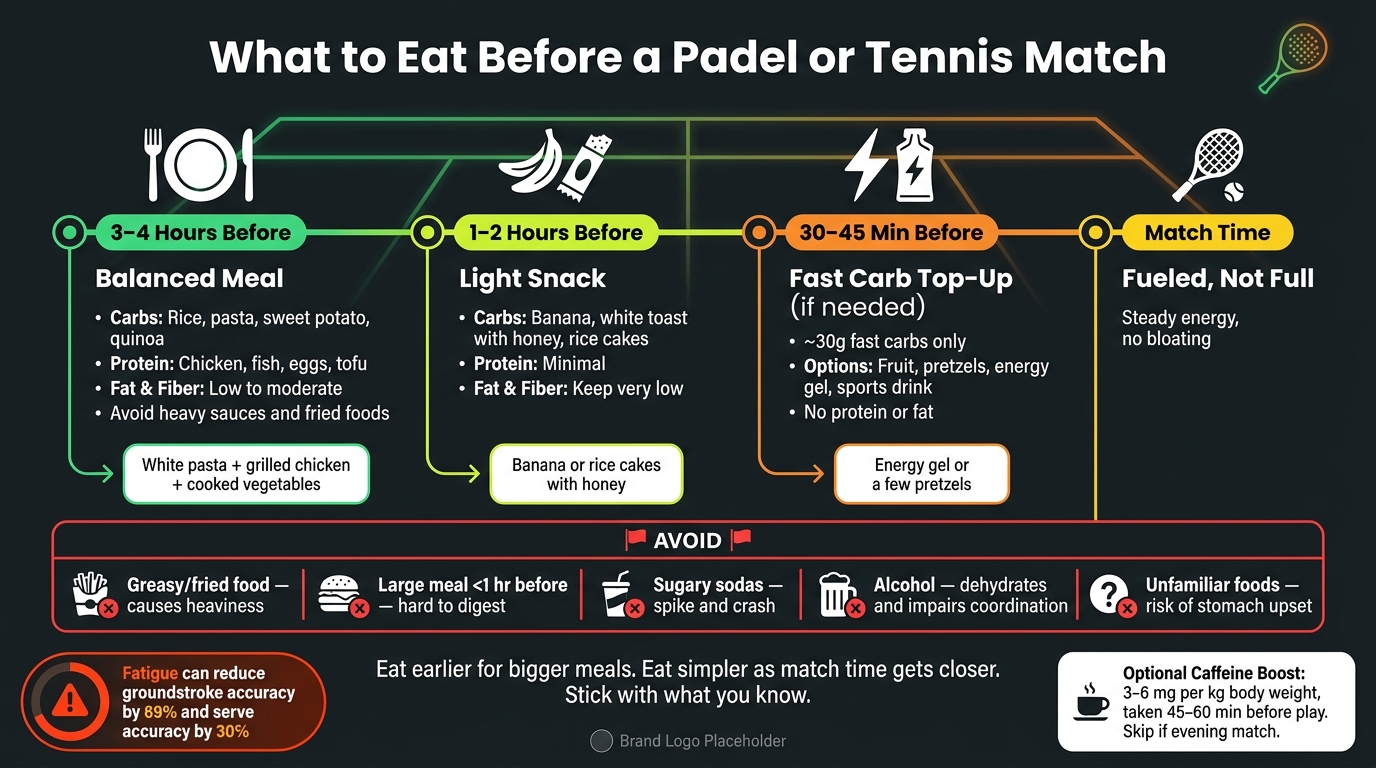
What to Eat Before a Padel or Tennis Match: Pre-Match Nutrition Timeline
Perfect Your Pre-Match Meal | Tennis Nutrition Tips from Coachlife.com
sbb-itb-5591e69
When to Eat Before a Match
Once you know what to eat, timing is what makes it click. It shapes both your energy and how your stomach feels when the match starts. The goal is simple: line up your food with how fast it digests before you book a padel court and head to your match.
3 to 4 hours before: eat a balanced meal
This is the best window for a proper meal. A carb-heavy plate with lean protein gives your body time to digest and stock up on energy before play. Think rice or pasta with grilled chicken, tuna, or tofu, plus a small serving of cooked vegetables. Keep sauces and fat on the lighter side so the meal doesn't sit heavy.
1 to 2 hours before: eat a small, easy-to-digest snack
At this point, go with something simple and carb-first. You want fuel, not a snack that lingers in your stomach. Keep fat and fiber low.
30 to 45 minutes before: add a light carb top-up if needed
If you still feel a bit low that close to match time, a small hit of fast carbs can help. Around 30 grams [4][2] is enough. Stick to quick-digesting carbs, and keep protein and fat low.
| Time Before Match | Recommended Meal or Snack Type | Typical Carb Sources | Protein Sources | Notes on Fat and Fiber |
|---|---|---|---|---|
| 3–4 Hours | Balanced meal | Rice, pasta, sweet potato, quinoa | Chicken, fish, eggs, tofu, lean turkey | Low to moderate; avoid heavy sauces or fried foods |
| 1–2 Hours | Easy-to-digest snack | Banana, white toast with jam or honey, rice cakes, cereal | Minimal protein | Keep very low |
| 30–45 Minutes | Light carb top-up (if needed) | Fruit, pretzels, energy gel, sports drink | None | Avoid entirely; focus on fast carbs |
Use the lightest option that still leaves you energized.
Simple Pre-Match Meals and Snacks to Try
Here are a few easy meal and snack ideas for each pre-match window. The closer you get to match time, the fewer foods tend to work well, so it helps to match your choice to the clock.
Meal ideas for several hours before play
Your pre-match meal should lean on carbs. Think of them as the main fuel source.
White pasta with marinara sauce and grilled chicken is a dependable go-to. A baked potato or sweet potato with roasted chicken breast and a small serving of cooked vegetables works well too. If you're playing earlier in the day, oatmeal with berries and Greek yogurt gives you carbs with a bit of protein. A turkey sandwich on white bread with a piece of fruit is another easy pick, especially on busy weekdays when you don't have much time to prep.
As match time gets closer, simpler carb sources often sit better. White bread, pasta, and rice are usually easier to digest than whole grains.
If your match is coming up soon, go lighter and switch to snacks.
Snack ideas for one to two hours before play
For 1 to 2 hours before play, stick with snacks that digest fast and don't weigh you down.
- A banana is one of the easiest options. It's portable, gentle on the stomach, and gives you fast natural sugars.
- Rice cakes with a thin spread of honey are a good choice because they're very low in fat and fiber.
- A fruit smoothie can work well when you want something light and easy to get down.
- Toast with a thin spread of nut butter also fits this window.
- Pretzels are worth keeping in your bag. They give you simple carbs and a little sodium, which can help support hydration before you step on court.
- A cereal bar is another easy grab-and-go option.
Test new snacks in practice, not on match day.
How to Balance Carbs and Protein Without Feeling Heavy
Once your meal timing is set, the next step is simple: build the plate the right way.
Use carbs as the base and add moderate protein
Carbohydrates fuel the repeated high-intensity bursts required in racket sports.[3][2] That’s why carbs should lead the meal, while protein stays moderate.
For a main meal 3 to 4 hours before play, use the half-plate rule. Fill about half your plate with carbohydrates like pasta, rice, or potatoes. Then add a palm-sized portion of lean protein such as chicken breast, turkey, or white fish.
You don’t need to count every gram here. A carb-heavy meal is usually enough.
Lower fat and fiber as match time gets closer
As match time gets closer, make digestion as easy as possible.
Fat and fiber slow digestion and can cause bloating or cramping.[1][3] Eating too close to play can trigger GI distress.[3] So in the 2 to 3 hours before play, skip foods like beans, broccoli, cabbage, creamy sauces, fried foods, and heavy cheese.[1][3]
Keep pre-match drinking simple too. Don’t chug large amounts right before play.
What to Avoid Before Play and Final Match-Day Tips
Foods and habits that commonly cause problems
Once you've got your timing dialed in, don't let a few bad food choices throw it off.
A lot of pre-match issues come down to the same mistakes. Greasy takeout, fried food, and heavy cream sauces can sit in your stomach and make you feel sluggish on court. Big meals less than an hour before play can cause the same problem, because your body is still trying to digest them.
Sugary sodas and energy drinks can also backfire. They may give you a short burst, then a drop in energy. If you want caffeine before a match, a useful dose is about 3–6 mg per kg of body weight, taken 45–60 minutes before play [1][4]. If your match is later in the evening, it's smarter to skip it so it doesn't mess with your sleep.
Alcohol is another one to avoid. It dehydrates you and can hurt coordination. And on match day, don't experiment. New foods or supplements might seem harmless, but they can lead to stomach trouble at the worst time. Try anything new during practice first. This is especially important during tennis beginner training when you are still learning how your body reacts to match-day intensity.
Here's a simple cheat sheet for common match-day mistakes:
| Food or Habit | Why It Is a Problem | Better Alternative |
|---|---|---|
| Greasy/fried food | Causes heaviness and bloating | Grilled chicken or fish with white rice |
| Large meal less than 1 hour before play | Too close to play | A light carb top-up like a banana or rice cake |
| Sugary sodas and energy drinks | Quick spike and crash | Water or an electrolyte drink |
| Alcohol | Dehydrates and impairs coordination | Water |
| Unfamiliar foods or supplements | Can cause unexpected stomach upset | Stick to foods you've already tested in practice |
Match-day rules to remember
Keep your main meal 3 to 4 hours before play, make carbohydrates the main focus, and keep protein moderate [1][2]. As match time gets closer, cut back on fat and fiber. Stick with foods you already know sit well, and keep everything simple.
FAQs
What if my match starts early?
For an early morning match, the main job starts the night before. Go into it well fueled with a moderate-carbohydrate dinner so you’re not trying to play catch-up at sunrise.
If you have enough time before the match, eat a small, high-carbohydrate snack about 30 to 45 minutes before play. Good options include rice cakes, a banana, or white cereal.
If eating that early feels tough, keep it simple. Have an electrolyte drink and a fast-digesting snack like an energy gel or banana after your warm-up. Skip foods that are high in fiber, high in fat, or just plain heavy, since they can sit in your stomach and slow you down.
How do I eat if I have a sensitive stomach?
Stick with easy-to-digest carbs that are low in fat and fiber so your stomach stays calm. Skip foods that are high in fat, fried, greasy, or packed with fiber, like large salads, beans, and whole-grain bread.
Pair moderate portions of lean protein with simple carbs such as white rice, pasta, or white bread. Try these foods during practice, not on match day. If solid food doesn't sit well, go with a carb drink, a smoothie, or yogurt.
Should I change my food for long matches?
Yes. For matches that last more than 2 hours, bump your carb intake to 60–90 grams per hour if your stomach handles it well. A mix of glucose and fructose tends to work best because your body can absorb more of it.
No matter how long the match is, put carbs first for energy and focus. Between matches, skip heavy meals and go easy on foods that are high in fat or fiber, since they can lead to stomach trouble.