If I pack just seven hydration items before I leave, I’m far less likely to run out of fluids mid-match. Tennis players can lose enough sweat to need 32–60 oz of fluid per hour, and a simple plan - main bottle, backup drink, electrolytes, towel, spare lid, cooler pouch, and refill plan - helps me drink on time instead of scrambling at changeovers.
Here’s the short version:
- I fill a 24–32 oz water bottle before heading out to outdoor tennis courts in London
- I bring a 16–20 oz backup drink for matches over 60 minutes
- I pack electrolyte tablets or sachets, with one extra
- I keep two towels: one for grip, one for cooling
- I stash a spare bottle lid in my bag
- I use a cooler pouch or frozen bottle to keep drinks cold
- I follow a post-match refill plan and aim to replace 150% of fluid lost within 2 hours
A few numbers matter most: 4–8 oz per changeover for lighter sweaters, 8–16 oz if I sweat a lot, and 300–700 mg of sodium per hour for longer or hotter sessions. If it’s over 86°F, or the match may drag on, I don’t rely on plain water alone.
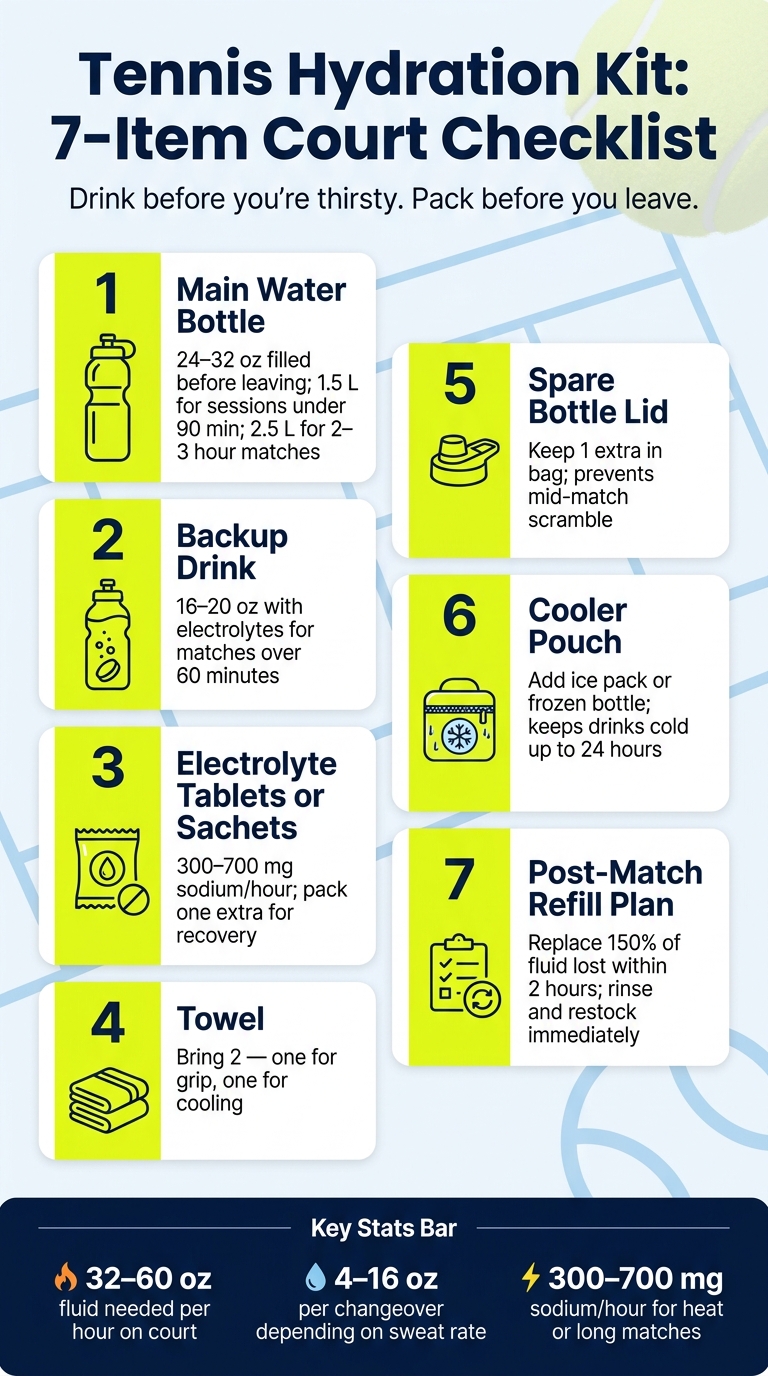
Tennis Hydration Kit: 7-Item Court Checklist
Hydration strategies for the tennis court #tennisplayer
sbb-itb-5591e69
Quick Comparison
| Item | What I pack it for | Simple target |
|---|---|---|
| Main water bottle | Base hydration on court | 24–32 oz filled before I leave |
| Backup drink | Longer matches | 16–20 oz with electrolytes |
| Electrolytes | Heat, humidity, long play | 300–700 mg sodium/hour |
| Towel | Grip + cooling | 2 towels |
| Spare lid | Lost or cracked cap | 1 extra in bag |
| Cooler pouch | Keep drinks cold | Add ice pack or frozen bottle |
| Refill plan | Next session prep | Rehydrate and restock right away |
Bottom line: I don’t need a big setup. I just need a small system that keeps water cold, electrolytes ready, and my bag stocked before I step on court.
Pre-Match Bottle Setup Checklist
Set up your bottles at home so you can hydrate fast during changeovers.
Start with the bottles you’ll use on court.
Fill the Main Water Bottle Before You Leave
Fill a 24–32 oz main bottle with cold water before you leave. If the day is above 80°F, partly freeze it overnight or chill it well. Tennis players often need 32–60 oz of fluid per hour on court [3][5].
Prepare and Label a Backup Drink
If your match may run longer than 60 minutes, bring a second bottle of 16–20 oz with an electrolyte tablet or sachet mixed in. Mark that backup bottle with waterproof tape or a colored cap so you can grab the right one fast during changeovers.
Set a Simple Drinking Plan for the Court
Plan to drink 4–8 oz per changeover if you sweat lightly to moderately, or 8–16 oz if you sweat a lot [3][5].
Drink water at a steady pace before the match, then take a few sips at each changeover.
Before you head out, check your urine color. If it’s darker than lemonade, drink another 16 oz (about 500 mL) [7].
Once your bottles are ready, pack your electrolyte backup.
Electrolytes and Backup Hydration Checklist
Once your bottles are packed, add electrolytes for long matches and hot days.
Pack Enough Electrolyte Tablets or Sachets
Bring enough electrolyte tablets or sachets for the full match, plus one extra for recovery. Store them in a dry zip bag inside your tennis bag so humidity at the court or a spilled drink doesn’t wreck them [5].
A good target is 300–700 mg of sodium per hour of play. That can help lower the risk of cramping and help you stay on track during play [1].
Bring One Extra Backup Hydration Option
Keep one extra electrolyte packet in your bag. If the match goes long, turns into an unexpected third set, or the weather gets brutal, that backup can save you from coming up short [5][1].
Choose Water or Electrolytes Based on Conditions
Plain water is usually fine for matches under an hour in mild weather. But for longer sessions, high humidity, or heat above 86°F, use water and electrolytes. That way, you’re replacing sodium along with fluid [2][1].
| Form | Pros | Cons | Best Use Case |
|---|---|---|---|
| Tablets | Portable, easy to dose, usually low sugar | Takes time to dissolve in cold water | Standard matches; moderate heat |
| Powder Packets | Dissolves fast; high-sodium options available | Can be messy to pour on court | High humidity; heavy sweat sessions |
| Premixed Drinks | Convenient; exact carb/electrolyte ratios | Heavy to carry; often has extra sugar | Quick turnarounds; tournament days |
Try to stick with drinks that are around 6–8% carbohydrate. That range helps with fluid absorption and can make stomach issues less likely [3][5].
Next, pack the small accessories that make hydration easier between changeovers.
On-Court Accessories Checklist
With your bottles packed and electrolytes sorted, a few small add-ons can be the difference between a smooth routine and a mid-match scramble.
Pack a Towel for Grip and Cooling
A towel is a core part of your kit. Bring two: one for grip, one for cooling.
It also helps to split where they go. Keep one in your bag and one courtside. In hot conditions, a towel soaked in cold water and placed on your neck or lap during changeovers can help you cool down [6][4]. That links cooling, grip, and hydration into one simple changeover routine.
Keep a Spare Bottle Lid in Your Bag
A spare lid takes up almost no space, but it can save you a headache. Keep one in a small pouch so a lost or cracked cap doesn't throw off the match.
Use a Cooler Pouch to Keep Drinks Cold
A cooler pouch helps your bottles stay cold longer. Pack bottles upright with an ice pack or a frozen water bottle. A frozen bottle does double duty: it works as an ice pack first, then becomes a cold drink as it melts [6].
| Storage Option | Pros | Cons | Best Use Case |
|---|---|---|---|
| Cooler Pouch | Keeps multiple bottles cold; protects electrolyte sachets | Adds bulk to the bag | Hot tournament days with back-to-back matches |
| Frozen Water Bottle | Works as an ice pack and gives you cold water as it melts | Condensation can wet other gear if not wrapped | Extreme heat or long summer matches |
| Insulated Bottle | Keeps drinks cold for a long time; durable | Heavier than plastic; limited capacity | Main hydration source for long matches |
After play, use the same pouch to bring bottles home for rinsing and restocking.
Once the match is over, rinse the bottles and refill the pouch so it's ready for next time.
Post-Match Refill Plan and Key Takeaways
Refill, Rinse, and Restock Right Away
After the final point, get your kit ready for the next session. Start rehydrating as soon as you finish. Aim to replace about 150% of the fluid you lost within two hours [1][7].
Give your bottles a quick rinse with hot water after each session, and deep-clean the lids once a week [2]. Also, don’t leave a damp bottle sealed in your bag overnight. That’s just asking for trouble. If you used electrolyte tablets or sachets, replace them right away so your bag is set for the next match [2][7].
Adjust the Kit for Your Next Session
Take a minute to check what you actually went through. If your main bottle ran dry, bring a bigger one next time or pack a backup [2]. Playing in hot or humid weather? Bring an extra drink and make sure you have enough electrolytes [2][7].
Urine color can help you dial this in for the next session. Pale straw yellow means you’re in good shape. Dark yellow or amber means you need more fluid [7]. It also helps to check water access at the venue before match day, so you know if you need to show up fully stocked [7].
Use this quick list to double-check your bag before you head out.
Seven Kit Items at a Glance
| # | Item | Key Detail |
|---|---|---|
| 1 | Main water bottle | 1.5 L (about 51 oz) for sessions under 90 minutes; 2.5 L (about 85 oz) for 2–3 hour matches [2] |
| 2 | Backup drink | Keep a second bottle ready |
| 3 | Electrolyte tablets or sachets | Pack enough for matches over 60–90 minutes or for hot, humid conditions [2][7] |
| 4 | Towel | Use it for grip and cooling |
| 5 | Spare bottle lid | Keep a clean extra lid in your bag |
| 6 | Cooler pouch | Can help keep water cold for up to 24 hours [2] |
| 7 | Post-match refill plan | Rinse, restock, and review what you used after each session |
FAQs
How do I know if I’m a heavy sweater?
Check your cap or shirt after play for visible salt marks. That’s a common clue that you may be a heavy sweater.
If you do sweat a lot, you’ll usually need 8 to 16 ounces during changeovers. Light to medium sweaters often do fine with 4 to 8 ounces. Heavy sweaters may also need up to 600 milligrams of sodium per hour.
Professional sweat testing can confirm how much fluid and sodium you lose.
What should I pack for a match with no water refill access?
Pack your fluids before you leave so you don’t start the match already behind on hydration. Aim for 64 to 128 ounces in total. That range makes sense because a standard three-set match can require more than 2 liters.
Bring at least two bottles:
- One with plain water
- One with a carbohydrate-electrolyte drink that has 300 to 600 milligrams of sodium per 16 ounces
If you’re playing a long match or dealing with hot weather, toss in a cooler pouch with ice. It also helps to bring extra electrolyte tablets or salt packets so you’re not scrambling mid-match.
Can I use sports drinks instead of electrolyte tablets?
Yes. For matches that last more than 60 minutes, or when the weather is hot, a sports drink with 6% to 8% carbohydrates and electrolytes can help replace sodium and support energy.
That said, not every sports drink is a good pick. Skip options that are high in sugar, caffeine, or carbonation. They may be less effective and can upset your stomach.
A simple approach works well for many players: alternate between plain water and a sports drink during changeovers.