 Image: Babolat
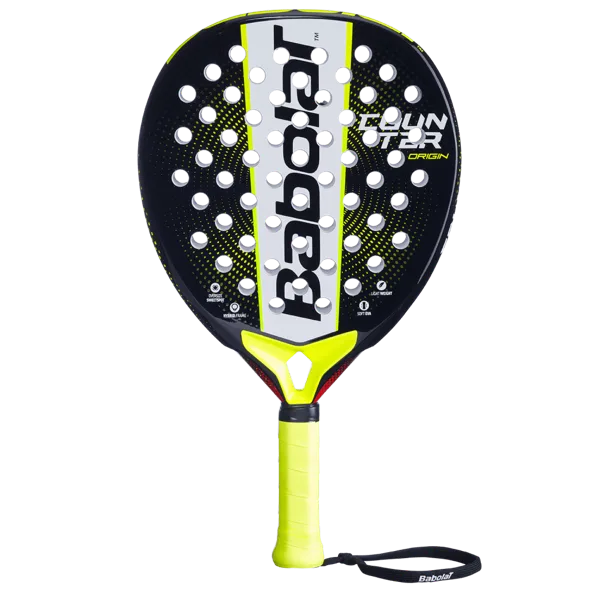
Best first racket
Babolat Counter Origin
- Shape
- Round
- Weight
- 355g
- Balance
- Low
- Level
- Beginner
Best for first-time adults who want the biggest, softest sweet spot. Skip if you already rally comfortably off the back glass.
Gear · 8 min
Shape, weight, balance, foam, carbon — what actually matters when you're buying your first padel racket, and what's marketing fluff.
Last updated: 4 July 2026
We may earn a commission if you buy through links on this page. It doesn't change our picks. How we make money.
Image: BabolatBest first racket
Babolat Counter Origin
Best for first-time adults who want the biggest, softest sweet spot. Skip if you already rally comfortably off the back glass.
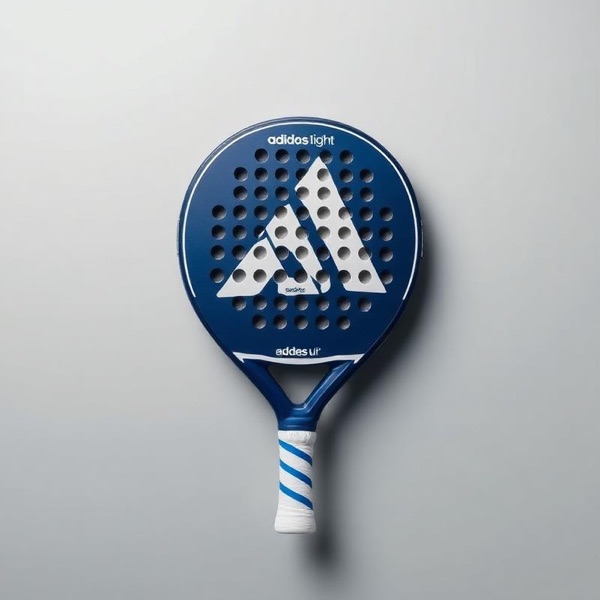
Best for smaller players
Adidas Match Light 3.3
Best for smaller-framed adults, teenagers and anyone with elbow history. Skip if you want more weight behind your smashes.
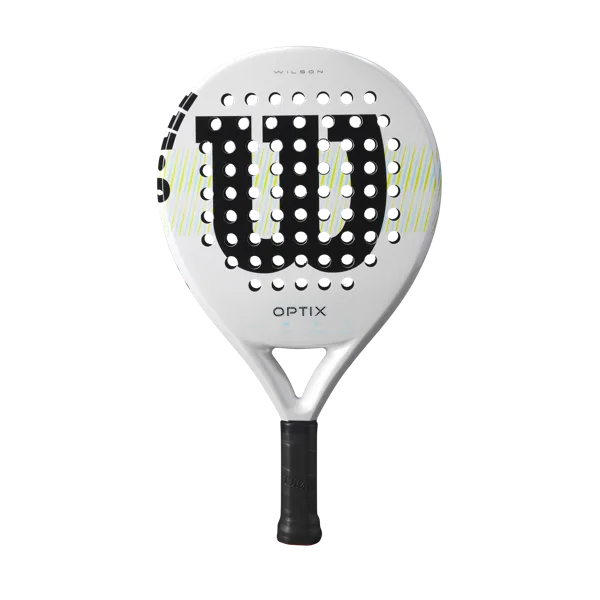 Image: Wilson
Most forgiving
Wilson Optix V1
Best for casual players who want a forgiving fibreglass face. Skip if you play more than twice a week.
Nine times out of ten, a beginner asks me the same question in their first lesson: 'is my racket okay?' Nine times out of ten, the honest answer is no — not because it's a bad racket, but because it's the wrong racket for the level they're at. Padel rackets are cheap to get wrong and expensive to get right if you don't know what you're looking at. This guide is the version of that conversation I wish I could hand out at the door.
You don't need to become a padel gear nerd. You just need to understand five things: shape, weight, balance, foam and carbon. Get those right and any racket in the right band will work. Get them wrong and even a £350 pro frame will make you worse.
Padel racket shape decides where the sweet spot sits on the face. That's the single biggest factor in how the racket feels to a beginner.
| Shape | Sweet spot | Who it suits |
|---|---|---|
| Round | Dead centre of the face | Beginners and control players — max forgiveness, easiest to hit |
| Teardrop | Slightly above centre | Intermediate players with grooved technique wanting more power |
| Diamond | Top third of the face | Advanced attackers who consistently hit the ball above their head |
If you're reading a beginner's guide, buy round. Full stop. Teardrop and diamond frames are sold hard by marketing — they look aggressive and pros use them on Instagram. On a beginner, they turn every mishit into a frame shot into the back glass, and every off-centre smash into an elbow twinge.
Padel rackets weigh between about 340g and 385g strung. Beginners want to sit in the middle of that range: 355–370g for most adults, 340–355g if you're smaller-framed, junior, or have any wrist or elbow history.
Balance is where the weight sits along the racket. 'Low' means head-light (closer to the grip), 'high' means head-heavy. Low or medium-low balance gives you the 'easy to swing' feel every beginner wants — the head follows your arm instead of dragging behind it. Head-heavy frames add power on smashes but tire out your shoulder over a 90-minute session and slow your reactions at the net.
Under the carbon face is a block of EVA foam. Soft EVA absorbs shock and gives you a bigger margin for error — perfect while you're still finding the middle of the racket. Hard EVA rebounds faster and gives more 'pop', but transmits every mishit straight into your elbow.
You'll see rackets marketed as 3K, 12K or 18K carbon. That number describes how the carbon threads are woven — higher numbers make the face stiffer, not stronger. Stiffer faces shrink the sweet spot and punish off-centre hits. For a beginner, 3K carbon (or even a fibreglass face) is more forgiving and cheaper. Save the 12K/18K for when your technique deserves them.
| Budget | What you get | Honest take |
|---|---|---|
| Under £60 | Entry-level / club-hire grade | Fine to try the sport once. Warps within 3 months of weekly play. |
| £80–£130 | Genuine beginner frames | The sweet spot. Round head, soft EVA, sensible weight. Buy here. |
| £140–£200 | Beginner-to-intermediate | Worth it if you're already playing twice a week and improving quickly. |
| £200+ | Intermediate / advanced | Wait. You'll get more from a £130 racket plus four lessons. |
These aren't the only good beginner rackets — they're three I'd happily hand to a new player without hesitation. All round-head, soft-EVA, arm-friendly and easy to find in the UK.
Three worked examples so you can see what a 'right' beginner spec looks like in the wild.
Image: BabolatBabolat Counter Origin
Best for first-time adults who want the biggest, softest sweet spot. Skip if you already rally comfortably off the back glass.
Adidas Match Light 3.3
Best for smaller-framed adults, teenagers and anyone with elbow history. Skip if you want more weight behind your smashes.
Image: WilsonWilson Optix V1
Best for casual players who want a forgiving fibreglass face. Skip if you play more than twice a week.
Want the full round-up with more options and price ranges? Read our dedicated best padel rackets for beginners guide. Already rallying confidently off the back glass? Skip straight to the intermediate padel rackets guide.
Roughly when three things are true: you can rally consistently off the back glass, you win more than you lose at your regular level, and your smashes start feeling 'dead' off the face. That's usually 12–18 months of weekly play. At that point, move on to a teardrop frame with medium EVA — see the intermediate guide for what to look for.
Shape. A round head puts the sweet spot exactly where beginners naturally hit the ball. Everything else — weight, foam, carbon — matters less than getting the shape right.
Almost never. Rackets over £200 are stiffer, more powerful and less forgiving — the opposite of what a beginner needs. You'll play worse and risk elbow pain. £100–£180 is the honest sweet spot.
12–18 months of weekly play if you look after it. You'll usually outgrow it before it wears out — that's the point at which you upgrade rather than replace.
No. Padel rackets are solid (no strings), shorter and drilled with holes. Every UK padel club rents rackets for £3–£5 a session — do that for your first two or three visits before you buy anything.
Look for 'junior' or 'light' models under 350g with soft EVA and a small grip. The Adidas Match Light 3.3 works well for teenagers and smaller adults.